Showing posts with label Park Row. Show all posts

Saturday, July 10, 2010

NYers still living behind post-9/11 checkpoints - Washington Post - CCRC contributorsParlk

By EVA DOU
The Associated Press
Wednesday, July 7, 2010; 3:06 PM
NEW YORK -- The street below Danny Chen's window in lower Manhattan has changed over the last decade from a bustling four-lane thoroughfare to an empty road lined with police barricades.
To get home each day, Chen has to present his ID at a police checkpoint. When the officer lowers the metal gate into the ground to let him in, he drives through as quickly as he can. More than once, the barricade has risen too soon, lifting his wife's minivan into the air.
Following the Sept. 11, 2001, terror attacks, the New York Police Department barricaded off its headquarters on Park Row. About 2,000 residents in two apartment complexes found themselves living inside a security zone.
Nine years later, they still are.
Many vehicles, including commercial traffic, are forbidden on the street, which used to be a key link between the Financial District and Chinatown.
"This used to be a bustling area," said Chen, a 52-year-old software engineer. "Now, it's ghost-townish."
In big cities across the country, security planters, metal gates and the concrete slabs called Jersey barriers have sprung up near government buildings.
Washington, D.C., is littered with bollards. Nearly half of Los Angeles' financial district is now partially restricted, according to a study at the University of Colorado Denver. Roads across dams have been closed to traffic for security concerns.
"I don't want us to lose a way of life that we've had, but sometimes we have to consider security, too," said Pace University Professor Joe Ryan, whose daily commute has been rerouted because of a road closure over the Kensico Dam in Valhalla.


The restrictions are especially noticeable to those sharing a backyard with the NYPD.
Park Row residents say ambulance response times have risen and traffic has become bottlenecked since they began living behind barricades.
Business owners say foot traffic has plummeted. Paul Lee says his family's 113-year-old general store folded in 2003 because of the new security measures."The suppliers don't want to come down anymore, and you have no more customers," Lee said.

Those who live and work behind the barricades say 9/11 is when everything changed, but, in a way, their struggle started long before.
John Ost, who lives near Park Row, says community members opposed the arrival of the police headquarters in the 1970s. They fought the transformation of a public parking lot to a police-only lot. They filed a lawsuit against the NYPD for constructing a $30 million command center next door, which they say makes the neighborhood an even bigger terrorism target.
Local elected officials also want Park Row reopened. Last month, U.S. Rep. Jerrold Nadler, D-N.Y., and other politicians sent a letter to Homeland Security Secretary Janet Napolitano urging that the street be reopened.
"Right after 9/11, you say, 'OK, fine,' but nine years later, people are saying, 'How much longer am I going to have to suffer?'" Nadler said.
Homeland Security spokeswoman Amy Kudwa said the department has received the letter and will respond directly rather than through the media.

Residents have had some wins, such as when a judge ordered police to stop using a park as a parking lot.
But for the most part, the interests of police - and ostensibly, public security - have won out. The eastern half of the street, from the Brooklyn Bridge to Chatham Square, has been closed to commuter traffic even as other spaces have reopened. Three other streets near headquarters have been blocked off entirely or partly.
Police officials say most of Park Row must be blocked off to protect its headquarters against terrorist threats, especially truck bombs.
One problem is that the security interests of police and the community don't always align.
The barricades, for example, stand right outside the Chatham Towers apartments. Resident Jeanie Chin, 61, said any bombing attempt to disable the barricades would occur at a safe distance from police headquarters - but right on her doorstep.
"They seem to be completely disregarding the safety of people who are living here and actually providing a human shield," said Chin, who works at a PR firm.

Police Commissioner Raymond Kelly said he understands residents' frustration, but the street will remain closed.
"People are burdened by it, they're inconvenienced by it," he said. "And we're sensitive to that issue, but unfortunately I can't see opening it."
Besides the practical inconveniences, some residents dislike the emptiness of the street. Park Row today has an abandoned air, with a rust-streaked median and thistles creeping out of cracks in the asphalt.
"It feels like a war zone," Ost said.
There are some residents who like the tight security. Elaine Nachanis, 76, has lived on the street for 48 years and says she feels safer.
"As long as there's the word 'terrorism' in the dictionary, we need it," she said.
But Ost says the police brought the security risks along with them when they set up headquarters in the neighborhood, about a mile south of their old home in Little Italy.
"We thought we could coexist with the police department, but they're making it difficult," he said.
Residents say they are angry that their neighborhood is being sacrificed for a greater security cause.
"If this were Park Avenue, not Park Row, this wouldn't have happened," said Chen, referring to the more prestigious Manhattan address.
Chen says despite the inconveniences, he isn't considering moving.
"My parents moved into Chatham Green in 1963," he said. "I got my own place here in '95. I'm just trying to defend home."
(This version corrects that politicians' letter was sent last month.)


SLIDESHOW
  Previous        Next    
This Thursday, July 1, 2010 photo barricades placed in the middle of Park Row in New York. Following the Sept. 11, 2001, terror attacks, the New York Police Department barricaded off its headquarters. About 2,000 residents in two nearby apartment complexes found themselves living inside a security zone. (AP Photo/Mary Altaffer)
This Thursday, July 1, 2010 photo barricades placed in the middle of Park Row in New York. Following the Sept. 11, 2001, terror attacks, the New York Police Department barricaded off its headquarters. About 2,000 residents in two nearby apartment complexes found themselves living inside a security zone. (AP Photo/Mary Altaffer)(Mary Altaffer - AP)

Thursday, November 5, 2009

Vacant Storefronts at the beginning of Mott Street - an all too common sight

Mott Street, the traditional backbone of Chinatown, the historic core, the ground zero of the Chinese experience on the eastern seaboard of America is on the verge of commercial collapse. The following photos were taken on November 5, 2009. Vacant storefronts in these photos, concentrated less than half a block from each other, represent millions of dollars in commerce and tax dollars that once flowed in this narrow corridor -- across from a closed Park Row and a major Chatham Square reconstruction that will soon bury more streets in rubble.

Since 2001 the NYPD has been steadfast in their claim that for security reasons -- Park Row, the entrance to Chinatown from the Brooklyn Bridge and other roadways must remain closed, despite the fact that similar security measures are not in place at 26 Federal Plaza. In addition the loss of former street parking on Park Row, Worth and the Bowery as well as the 400 car Municipal Garage, the loss of bus routes for years and the pervasive government permit placard abuse that was only partially alleviated two years ago after much community protest and documentation -- have helped to seal the fate of businesses at the beginning of Mott Street.

Rather than find a solution to the financial collapse occurring in proximity to Park Row and just a few blocks from City Hall, Mayor Bloomberg has done nothing. During his reelection bid, he met with his campaign supporters and hinted at working with Chinatown to find a way to get Park Row reopened, however, when the Downtown Express newspaper questioned just how he would do that, his spokesperson denied everything "we never advocated for the reopening of Park Row" was the official statement.

As local residents pleaded for a meeting with Police Headquarters to offer alternative security solutions, there has been no response. The snowball of financial despair will continue to roll down Mott Street with the impending Chatham Square's reconstruction. Mayor Bloomberg and his Police Commissioner Ray Kelly have deliberately allowed the ball to drop on this historic stretch of Chinatown. It appears these two have forgotten Benjamin Franklin's famous words, "Those who are willing to give up a little freedom for a little security, wind up with neither freedom, nor security".


1 Mott Street vacant for years


7 Mott Street


9 Mott Street


10 Mott Street


11 Mott Street


19-a Mott Street


1 Worth Street at corner of Mott Street


103 Mosco St.


Mosco Street at corner of Mott Street


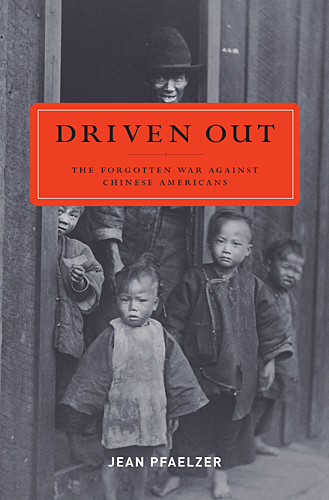
In relative terms, the "security" policies of Mayor Bloomberg, Police Commissioner Ray Kelly and DOT Commissioner Janette Sadik Khan go down in modern Chinese American history as having the same effect as those documented in --


  1. DRIVEN OUT: The Forgotten War Against Chinese Americans

    - 8:17am
    Driven Out: The Forgotten War Against Chinese Americans couldn't be more timely or important.” - Lisa See, best-selling author, Snow Flower and The Secret ...
    www.udel.edu/PR/drivenout/ - Cached - Similar -

By Jean Pfaelzer

DRIVEN OUT: The Forgotten War Against Chinese Americans


Thursday, September 24, 2009

From City Hall News "Chinatown pushes back against Mayor's reelection"


photo - city hall news


Chris Bragg of City Hall News
Sept. 18th 09

Closing of Park Row, Chatham Square development create backlash for Bloomberg

When he ran for re-election in 2005, Mayor Michael Bloomberg had few bigger boosters than Eddie Chiu.

Chiu, head of the 109-year-old Lin Sing Association social club in Chinatown, allowed Bloomberg to use the group’s six-story headquarters on Mott Street as his Chinatown campaign office—and the mayor proceeded to take upwards of 80 percent of the vote in the neighborhood, winning the overwhelming support of Chiu and other small business owners.

But four years later, Chiu said his feelings have changed dramatically.

Far from allowing the mayor to use his office, Chiu is now refusing to endorse Bloomberg, despite numerous entreaties from his campaign. In fact, he recently allowed an anti-Bloomberg group to hold a press conference at the group’s headquarters blasting the mayor.

“It’s very different from when he was running for a second term, to where he is now,” Chiu said. “A lot of people in Chinatown have had a change of heart. I think they’ll vote for Thompson.”

Bill Thompson has been trying to take advantage of the unrest, making several campaign stops in the neighborhood and holding a press conference at Park Row in late June to receive the endorsement of the Civic Center Residents Coalition. The population flexed its political muscles recently by electing Margaret Chin to the Council and unseating incumbent Alan Gerson.

A bike lane on Grand Street that further narrowed the already tight street is a major concern, but Park Row appears to be the main point of contention for Chinatown voters. The thoroughfare once connected Chinatown with the rest of Lower Manhattan, but was shut down after 9/11 because of concerns about an attack on 1 Police Plaza.

Eight years later, the street remains closed.

Residents say that this has crippled both the economy and the quality of life in Chinatown, choking it from the rest of Manhattan, with traffic often clogging neighborhood streets.

Late last year, the Economic Development Corporation, the Department of Transportation and the Police Department proposed a fix to alleviate the traffic flow problems: a $50 million plan to redevelop Chatham Square, a complicated seven-way intersection south of the Brooklyn Bridge.

Most Chinatown business and civic leaders, however, have objected to the plan since it would essentially make the closing of Park Row permanent.

They also say it was developed without hearing concerns from affected residents.

“We’ve made offers and proposed many alternatives,” said Jeanie Chen, of the Civic Center Residents Coalition, a group that advocates for the reopening of Park Row. “But the mayor’s office wants to do this without community input.”

Bloomberg appears aware of the unrest. In late June, he held a private dinner with 10 leading members of the Chinese business community and members of the Chinese press. Following the meeting, the Chinese press declared that the mayor had indicated he was open to reopening of Park Row.

But when reporters then followed up with the mayor’s office after the meeting, it denied that the mayor had made any such promise.

The Bloomberg campaign did not respond to a request for comments on this or other issues related to Chinatown, or about his standing in the neighborhood.

Justin Yu, head of the powerful Chinese Consolidated Benevolent Association business group, attended the dinner. A Bloomberg ally, Yu said that the mayor had promised to delay the start of the Chatham Square development—it had been scheduled to begin in July—and had not specifically promised to advocate for Park Row’s reopening.

Yu, who is considered so influential locally that some people call him the mayor of Chinatown, said that though he opposed the Chatham Square proposal, he would continue to support Bloomberg because of the mayor’s record on education and crime.

“Nobody satisfies people 100 percent of the time,” Yu explained.

Others contend that Yu has divided loyalties because his daughter, Pauleen Yu, is the Chinatown liaison for Bloomberg’s community affairs unit.

And they say the mere fact that Bloomberg is speaking only to the Chinatown elite, rather than seeking input from the community at large, represents the mayor’s attitude towards its residents.

“It’s indicative of a selective, colonial mentality,” said Jan Lee, a Chinatown small business owner and opponent of Bloomberg’s proposal. “In colonial situations, government has chosen to speak only to a select few leaders. They stay away from the masses.”

Others in the community wonder if the unrest with Bloomberg is as deep as some of the rhetoric suggests. During the 2005 campaign, they note, Bloomberg made a concession to the community by allowing bus traffic to again begin traveling down Park Row.

But Lee said that while Thompson has been campaigning often in the neighborhood, Bloomberg had not yet held an appearance.

“He can’t walk down Mott Street anymore,” Lee said. “We will no longer welcome him with open arms. And he knows that.”

--
ABOVE: Bill Thompson has been nurturing support among a Chinatown community unhappy with the mayor’s record, gaining support from local leaders like Jan Lee, a small business owner and executive vice president of the Civic Center Residents Coalition

Friday, February 6, 2009

City Council Chaham Square Oversight Hearing - continued


The Department of Transportation and the Mayor's office have tried to make their case that the Park Row Environmental Impact Statement, released in Aug. of 2007 after two and half years in the making is sufficient to satisfy the EIS requirement in the LMDC contract recently reviewed by Council members John Liu and Alan Gerson. It's noteworthy that the Final Environmental Impact Statement for Park Row has been removed from the NYPD website, there is no way for the public to obtain a copy of the Final EIS for Park Row unless it is "FOIL'ED". There's no way to tell when the F.E.I.S. was removed from the NYPD website.
Much was found to be inaccurate in the Park Row EIS, and in fact CB3 pointed out such goodies as "illegal segmentation" of data and testified at the draft EIS hearings in Chinatown. Community members and CCRC pointed out the business survey in the socioeconomic portion of the EIS is flimsy and without translations. CCRC could confirm less than 2 dozen businesses in Chinatown that were interviewed for the Park Row EIS. Real estate values and economic conditions were inaccurate and data used to obtain the findings were gleaned from constantly expanding and contracting geographic areas, a tactic often used to skew data to a desired outcome.
Business surveys and economic data, after community outcry, were rewritten to reflect a more realistic condition for the FINAL EIS. In short, the Park Row EIS was replete with errors, misinformation, flimsy surveys and worst of all the Chatham Square plan as a mitigation for the closure of Park Row. Between the draft EIS hearings and the final EIS some details were changed due to heavy scrutiny and criticism. Outting the errors and conspicuous omissions have been the source of much whining by the City and DOT as the reason why a backlog has occurred between the reconstruction of the Brooklyn Bridge and Chatham Square's reconstruction.

The Park Row EIS is unique in that it was done after the fact. Rarely are EIS's done retroactively. It is difficult to determine the effects of an "action" after it was done to the community and the data that precluded the action is difficult to reflect accurately. If the City wishes to have the EIS have a predetermined outcome, in this case - "closing Park Row was justified and necessary" - then the data collected to come that conclusion can be molded to formulate that result. CCRC has maintained that this is what was done in the Park Row EIS. Phillip Habib is the same planner responsible for both the Park Row EIS, and the Chatham Square plan being used today.

The socioeconomic portion of the Park Row EIS being applied to Chatham Square's reconstruction today is wholly inaccurate given the fact that the data collection reflects a period from before 2001 through early 2005. To say that the "action", in this case a four year long total tear down and reconstruction of Chatham Square, has been accurately addressed in the EIS which was begun in 2004 and completed in 2007 amounts to lying.

The Park Row EIS which contains socioeconomic impacts with a baseline condition precluding the attacks of 9/11/01 and ending in 2005 cannot be used to reflect an action that is ABOUT TO HAPPEN (Chatham Square reconstruction) in today's climate of recession, with projections that should extend at least five years into the future in the "WITH ACTION" scenario.

Although the Park Row EIS contains a rudimentary version of the Chatham Square alignment suggestions as a mitigation for the closure of Park Row, it does NOT reflect what impacts 4+ years of construction will have on the Chinatown community and therefore cannot be used in PLACE OF a separate and timely EIS of its own.

One of the most egregious omissions in the Park Row EIS is the lack of a pedestrian safety study. Numerous times the community and traffic Engineer Brian Ketchum have asked for a pedestrian safety study for the Chatham Square plan ,yet none has been produced. If such a study existed in the Park Row EIS, surely one would have been offered. Even if pedestrian counts and safety analysis was done for the Park Row EIS it could not be used today because, as Brian Ketchum has said numerous new residential developments have not been accounted for in the Chatham Square area.

Councilmembers Liu and Gerson questioned the D.O.T. and City representatives as to when the Chatham Square plans and accompanying maps and diagrams were submitted to local public libraries. The Council members determined from the lack of an answer that in fact no materials have ever been submitted to any public library anywhere in the City.

The City and DOT's response to claims of "not enough outreach" and "no access to materials" for perusal by the public of the Chatham Square reconstruction plan has been that they have satisfied this requirement because "it's included in the Park Row EIS" . CCRC has made the case that the version included in that document is rudimentary and therefore unacceptable. Not only that, the Park Row EIS is virtually impossible to locate online to this day. It used to be on the NYPD website, and during the draft EIS process complaints were made to the NYPD that the public had a hard time finding the 300+ page document on their website.
The Park Row Environmental Impact Statement is not available at the Chatham Square public Library. The only two documents that contain various versions of the Chatham Square reconstruction are NOT available at any public library in NYC, and yet the City and DOT claim that they have satisfied their requirement in providing access to the plan.

Sunday, December 7, 2008

Where's John?


We've heard from Councilman Alan Gerson (see posting below for his transcript) and we've heard from Assembly Speaker Sheldon Silver (see his transcript below) who have both weighed in on Chatham Square. Their message is united with the Chinatown community : "we reject this plan" "it needs more community input" "Open Park Row".

Both Councilman Gerson and Speaker Silver have been in constant contact with community leaders on Chatham Square's reconstruction, and they vowed to continue a dialogue.

Notably absent from this discussion is Councilman John Liu, the Chair of the Transportatin Committee of the City Council.

John Liu, as Chair of Transportation, was there to hear testimony on illegal placard parking rampant in Chinatown, but on this issue he is silent and perhaps deaf.

Consider this the first of many "Shout outs" John.